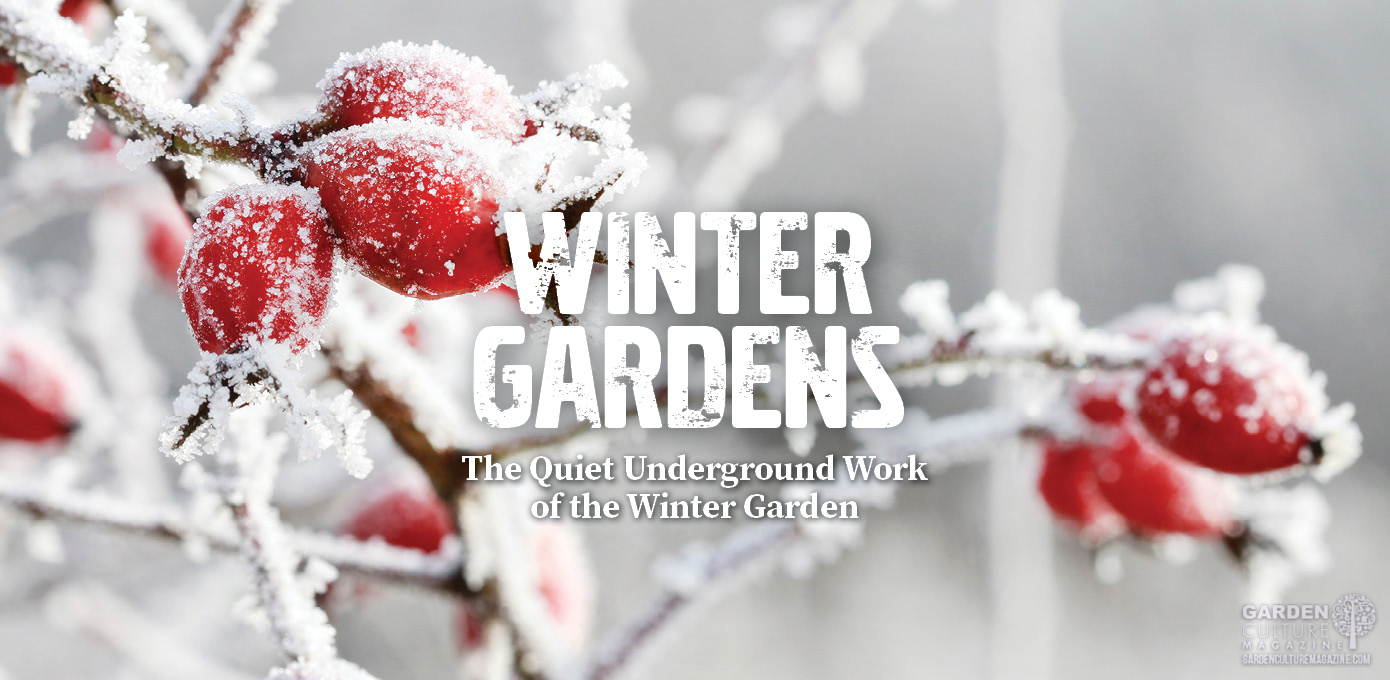
Winter Garden 101: The Quiet Underground Work
This winter is all about hygge – a sense of contentment and comfort derived from our surroundings. For me, the best place to find that sense of hygge is in nature. It’s incredible to see how, even in the middle of winter, the garden changes daily. Going for a walk through the garden or in nature this time of year is magical, especially once you know what is happening behind the scenes and below ground. Once you do, you will never think of winter as a drab, cold, dead time in the garden again! It’s the best time of year to take comfort in knowing that Mother Nature has it all under control.
Roots at Work
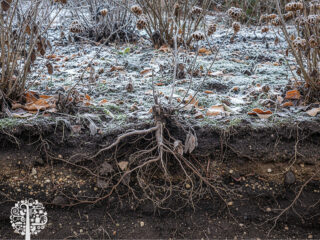
Plant roots are having a moment! They’re busy acting as anchors during winter’s freeze–thaw cycles, which can cause the soil to expand and contract. Without the roots holding the plants in place, they could lift or shift, leading to damage. Plants even have a strategy to prevent water in the roots above the frost layer from freezing. As the ground cools, roots release water from their cells into the surrounding soil. Without this capability, roots could burst in the same way that water-filled pipes burst.
The Winter Garden’s Carbon Sequestering Capabilities
Researchers have discovered that, despite the assumption that the roots of deciduous trees enter dormancy in winter because the tree cannot photosynthesize without leaves, this isn’t true. They found that roots were still growing and capable of sequestering carbon. Pretty cool, right?
In winter, conifers alter the structure of their membranes, which house the protein complexes involved in photosynthesis. This process, called “spillover,” allows excess light energy to dissipate safely. The tree still photosynthesizes, absorbing carbon.
The Winter Garden Stores Energy
Roots, bulbs, and woody stems store sugars and starches. These reserves are protected from freezing temperatures by natural antifreeze-like compounds that lower the temperature at which root water will freeze, just as oceans don’t freeze. These starches are the food the plant needs in spring to break its dormancy.
Budding Growth
I love to walk through the garden with my reading glasses on and take close looks at the spring shrubs, such as the lilac and the clematis vines. If you look very closely, you will see small buds. They formed last summer, even before the plant shed its current growth. They are designed to withstand snow, ice, and subzero temperatures. By withdrawing water from them before winter, trees protect these new buds from frost damage.
The Winter Garden Houses Germinating Seeds
Many seeds require a cold period to germinate; this is called seed stratification. In nature, this happens as plants drop their seeds to the ground in the fall. They overwinter under a blanket of snow or the natural mulch of fallen leaves, and in the spring, as temperatures rise, the seed breaks from dormancy and germinates.
The next time you look out the window at the garden and sigh, thinking it looks so bare and drab in winter, don’t be fooled – a lot is going on out there.