
HVAC 101: Helpful Q&A on Heat & Humidity Control
Haley Nagasaki: Years ago, you were working in commercial HVAC. How did that translate into the cannabis sector and to the formation of your company, Stratus Designs?
Adam Clarke: I did a diploma in mechanical engineering many years ago, and then I was designing ice rinks and big commercial industrial refrigeration systems. From there, I ended up selling air handlers with a company called Munters, which specializes in dehumidification, or psychometrics – the moisture movement.
From there, I ended up designing all the dry rooms at Tilray in Nanaimo, and then just kept in the cannabis industry ever since. We’ve probably been involved in doing well over a hundred HVAC designs for cannabis facilities now!
HN: For the micro cultivator, West Coast Weedery, what was the first thing you roughed out for HVAC plans?
AC: Start at the end and work backwards.
So, design out the building – design out plant count, lighting, and everything we need for what we want to do to be successful. And then from there, match those loads to what we need for HVAC in the space, basically.
But it’s very small, we’re 500 square feet. So, in turn, it’s not a very big HVAC load. It’s actually more difficult not to oversize things than to undersize them, which is a bit different from a lot of problems and a lot of grows.
HN: Except if you’re a home grower! When it comes to the home grow, someone using a tent or spare room, what are some things they need to take into account off the bat?
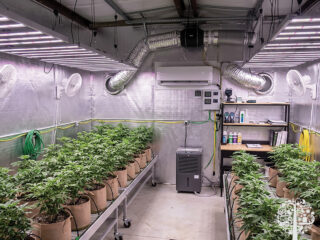
AC: If they’re not using air conditioning in the room, they should put a fan on their tent with a reverse-acting thermostat that draws air from outside the tent into the tent when the tent starts to heat. Assuming the room outside will be colder, which it typically is. So that’s like a little way to cheat, basically.
In general, I’d be more worried about humidity than temperature, especially running LEDs. These plants can tolerate quite high temperatures.
I’ve been starting to run my rooms even warmer and warmer, the more I’m running an LED, and things seem to be cool with it, actually. It’s just about keeping the humidity under control.
HN: Okay, so you’re talking about running a dehumidifier, then?
AC: Yeah, definitely.
I mean, in one tent you might not need it, but in general, your plants like a higher humidity – 60-65%, most of the time. The problem is if you’re that high and you’re not controlling it right, or you have diseases, they’ll get worse. Powdery mildew will proliferate, or other things will proliferate.
There’s a delicate balance between getting enough moisture in the air for the plants to thrive and not enough for any of the problems you may have.
Keep in mind, whether you’re in a humid or dry climate, it’s generally the same. If you’re in a dry climate like Alberta but have bad humidity one week a year, you have to design your system to manage it for the entire year, even though you don’t need to manage it for the entire year. Spring and fall are typically humidity problems; summer and winter are typically not. It’s the swing season where you get too much condensation.
HN: Generally speaking, is one fan going to be enough for the entire room?
AC: For a single tent, a 6- to 8-inch variable-speed unit would be plenty. You shouldn’t need to run it all the time, either.
HN: How do you monitor your grow?
AC: From the Stratus side, we’re a Reliable Controls dealer. So, I have a very sophisticated, very robust automation system that I can customize to do anything I want. And then I also work with ARINAT to deal with all my wireless sensors, my soil moisture, pH, and a bunch of other stuff.
It’s hard on the small scale to automate everything, but on the other end of it, if you’re only running five plants, why do you need to automate your irrigation? It takes no time. Automation saves time and increases consistency more than anything.
We measure volumetric water content, temperature, soil dielectric permittivity, soil electrical conductivity, and the poor electrical conductivity of the soil. So the ability of the nutrients to move through the soil, the temperature, and the amount of actual water content in the bag.
HN: I want to talk about preventing light leaks. With a tent, how can people mitigate light leaks?
AC: I mean you’re talking to someone who doesn’t truly believe that light leaks are as bad an issue as everyone thinks they are. A bad light leak is a problem, but the reality is most grow has a light leak somewhere. There’s some light, some LED, some sensor, some this, some that, bullshit that’s running, and you know what? It’s amazing how much good weed gets produced even though rooms aren’t perfect.
Yes, a light leak will cause a problem, no question. You have a light in your room that’s not supposed to be on at night, you’re gonna hermaphrodite and cause all sorts of bullshit. But like, a little tiny LED diode in the room, is it gonna cause problems? Some people are gonna say yes, some people are gonna say no. Just do the best you can.
HN: What about energy conservation?
AC: Don’t worry about it. If you want good weed, just don’t care.
It’s like anything else. If you want the best quality weed, don’t care what the power you put into it to create it is, if it’s for personal consumption.
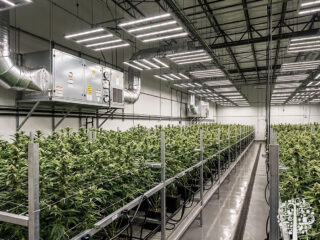
The only way to save energy is to lower your light levels and change your room conditions. You can use heat pump technology and a few other things, but realistically, we’re growing cannabis to get product at the end that is quality.
When we get everything dialed in, and we get it producing consistently the exact same every time, then we can go and look and see if we can save some energy on it. But right now, most people are struggling to even produce consistent cannabis every day, all the time. So stop worrying about saving money on your production, on energy usage, focus on producing the same quality cannabis all the time, and increase the value of your product, then we’ll go save money.
HVAC is the biggest place to save money in your building, but if you installed mini-splits on day one, or you installed cheap HVAC and you didn’t buy, say, an industrial chilled water system, you’re always going to run 20% more energy than the guy who has the chilled water system, give or take. There’s no way around it.
Learn how to grow better weed with what you have. Some people tend to chase too many problems rather than just enjoy what they have and be happy with it.


