
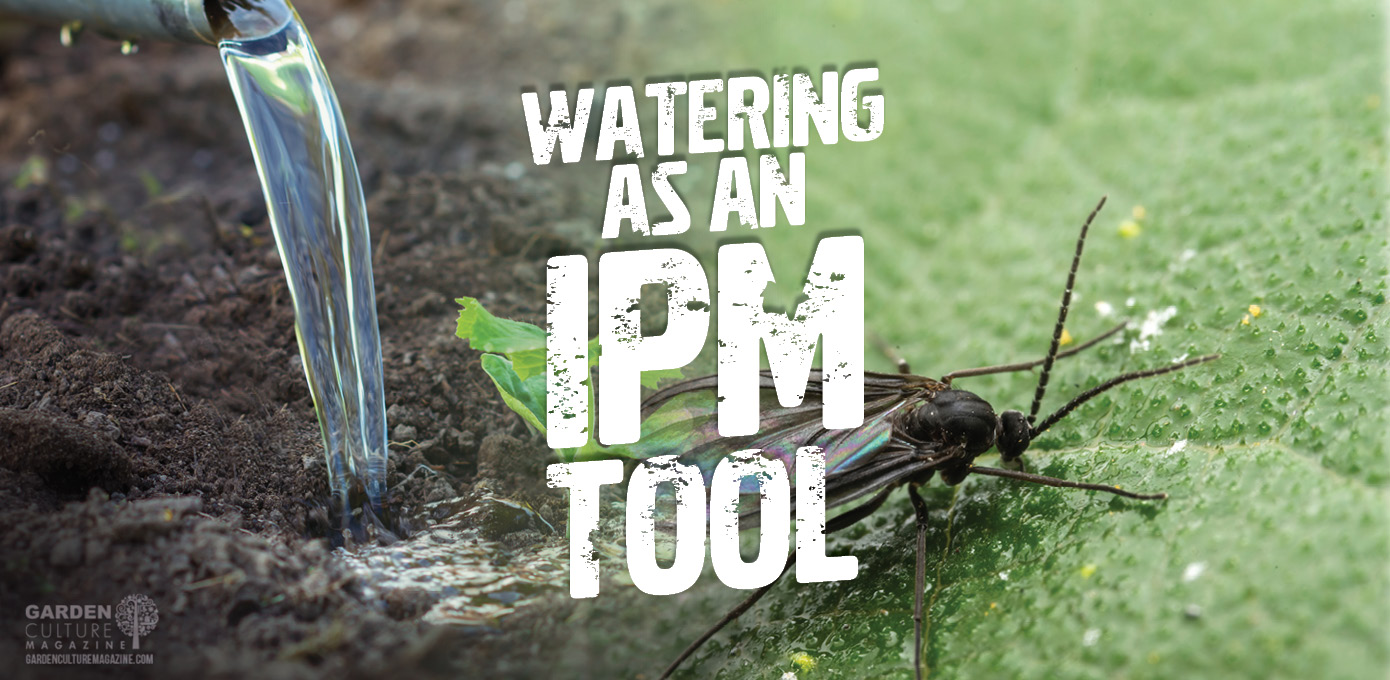
Watering like a Boss: Irrigation Techniques and IPM
Watering: A Common Problem
As a pest management consultant, I often see water-related IPM issues, particularly insect pests living in the root zone. Fungus gnats and shore flies can reach high numbers when the root zone is consistently moist. In low populations, these pests will likely leave your roots alone, preferring to eat organic materials, fungi, and algae. But when the environment tips in favor of the insects and is soggy for prolonged periods, we see a population explosion, and they may feast on the plant roots.
When it comes to proper irrigation techniques, the more we reduce the soil’s oxygen content by over-watering, the greater root death we see, which increases the food source (dead root tissue) for the larvae of these pests. This is especially damaging to young developing plants. The attack on young root hairs reduces the uptake of water and nutrients for the plants and creates a wound for pathogens to take up residence. Heed caution, gardeners!
Watering and Plant Pathogens
Pythium is one of many plant pathogens commonly found in greenhouses and root zones. It flourishes in wet environments. Once the hyphae develop inside the plant tissues, they release destructive enzymes that absorb nutrients. Pythium is extremely difficult to control without systemic fungicides and often causes plant death.
As these pests’ larvae develop into adults, they fly around and move from plant to plant. They carry pathogen spores on their feet and bodies, and the Pythium pathogen remains viable as it passes through the insect’s gut and spreads through excrement. If this happens, treating the insects carrying the disease and the disease itself is essential, or this vicious cycle will continue.

Valuable Lessons in Watering
Overwatering may seem like a small misstep, but for growers, it can quickly spiral into serious problems. To recap, when the root zone stays too moist, it disrupts oxygen balance and creates the perfect breeding ground for pests like fungus gnats and shore flies. These insects don’t just swarm—they attack young root hairs, reducing the plant’s ability to absorb nutrients and water while opening the door for pathogens.
And again, one of the most dangerous culprits, Pythium, thrives in these conditions and is notoriously hard to control without systemic fungicides. Once it’s in, plant death often follows. That’s why it’s essential to treat both the disease and the pests that spread it. As simple as watering seems, it’s an art that demands attention, experience, and restraint.
I am grateful to my mentor for these lessons in proper watering techniques. A task that appears so simple is an art form that requires practice and diligence. Remember, an ounce of prevention is worth a pound of cure. Following the rule that “you can always add more” is key.
Mastering moisture means mastering the balance between care and control!


